 Livescore
Queiroz Departure Is A Watershed Moment for Iranian Football
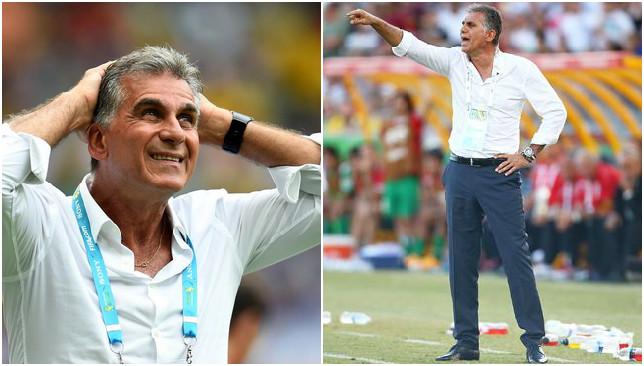
It has been less than a month since Carlos Queiroz said his final goodbye as the manager of the Iranian national side, and departed for pastures new. More time will have to pass before we can judge his tenure effectively, but right now the statistics seem to speak for themselves. Over his eight years as manager, he led the team out for more international fixtures than any coach who came before him. He won more games than any of his predecessors by a factor of more than double. He's the only coach in the history of the national side to qualify for two World Cup tournaments, and led Iran to their best finish at an Asian Cup in a generation.
Despite that, there’s an air of failure about the way he departed. Queiroz was supposed to end the wait for the Asian Cup, and demonstrate that the team had truly made progress during his eight years in charge. They weren’t able to do it; swept aside too easily by a Japan team who never needed to get out of first gear to do it. In his final years in the post, the Portuguese sometimes gave the impression of a man who no longer wanted the job. He was known to have applied for the vacant position of Cameroon manager during 2018. Now, barely two weeks after managing Iran for the final time, he has already gone back to work as Colombia’s manager. It is hard to believe the Colombian appointment would have happened so quickly if conversations hadn’t taken place while Queiroz was still in charge of Iran. Questions will therefore always remain about whether the coach’s heart was truly still in the job at the end.
Regardless of the whens, wheres, and whys, Queiroz is gone, and a new coach must be located. After the main part of a decade with a foreign coach at the helm, Iran must now decide whether it wants to repeat the project and find another international manager with good coaching pedigree, or place faith in one of its own citizens to take the reigns. Prior comments by Mehdi Taj, head of the Iranian football federation, suggest that they will once again look for a major name from abroad. If they do, the suspicion will once again be how committed the new coach is to their job, and whether they'd be tempted to leave if a better option appeared.
Right now, the Iranian Football Federation find themselves in the position of being tempted into a gamble, having the resources to push things forward, but uncertain of the best route. It's a feeling that many of us can relate to. Like a player logging into roseslots.com with money to burn, the question is not whether they will spend that money, but how they'll spend it. Do they go to a tried and trusted favorite game, or do they risk something new? Are they more likely to win more if they stick with what they know, or are there bigger rewards to be had elsewhere? That's gambling at its most basic level, and that's the risk vs. reward conversation that's presumably happening within the headquarters of Team Melli as we speak.
Recently, the legendary Heshmat Mohajerani spoke out to say that Iran needs to start developing footballers from the grassroots level again, and that the responsibility to do so will rest on the shoulders of the next coach. Mohajerani, better than most, knows the value of developing young players, and the risks of not doing so. In the same interview, he said that he felt Team Melli shouldn’t rush into deciding who the next coach should be. He seemed to be implying that the football federation should consider not only who’s right for the role in terms of coaching the current crop of players, but also who’s right for coaching the crop of players who will come next.
This is why the idea of appointing a high profile foreign coach may not be a desirable one. It is admirable that the profile of Iranian football and the resources of the national side have improved so much in recent years that coaches of the caliber of Laurent Blanc are linked with the vacancy. That doesn't mean it's a great idea to appoint them. By paying big money to attract a coach from abroad, the Federation open themselves up to the risk of drawing mercenaries; coaches coming to the end of their careers looking for an easy job and a big paycheque. They'd likely go through the motions of managing the first team, but would be less interested in developing the younger players of building for the future. Coaches brought in from the outside have no prior emotional connection to Iran, and no natural interest in seeing Iranian football continue to progress. Is winning one Asian Cup with a Laurent Blanc or a Sven-Göran Eriksson at the helm more important than the long term health of Iranian football, and the potential for better World Cup performances four or even twelve years in the future?
Going for an Iranian as a coach is also a risky move for the Federation. By doing so, they'd be accused in some quarters of lacking ambition, or becoming too conservative in their approach. There is no currently serving Iranian coach who has a CV that could rival an experienced European coach coming in from a big club in a high-profile league. The players are less likely to be inspired by an Iranian national walking into the dressing room than they would be if someone they'd watched as either a player or a coach on television in a European Champions League game did the same. Football is a sport and an industry where, unfortunately, reputation sometimes counts for more than talent.
The responsibility that we believe faces the Federation right now is this:- To look at the attitude of the next potential coach, and not their passport. The next coach should be prepared to live, work, eat and sleep in Iran to further the prospects of the team. They should have a passion for not only the present but the future of the Iranian league. They should have knowledge of the Persian Gulf League and all of its best performers. If they don't have that, and aren't willing to acquire it, then they shouldn't be considered.
An Iranian coach may not bring Team Melli the next Asian Cup, but they might provide the tools to win the one after that.